Showing posts with label Photography. Show all posts

Wednesday, 20 October 2010

Car crash, crashed cars: art works revisited


A couple of months back I posted about car crash as a subject and object in some artists's works, and surprisingly people seem to be fascinated by car crash, death and chaos (keyword searches on Google told me). Well here is some more, gruesome and graphic images by New York-based Danish photographer Peter Funch and one of the latest photo series from German artist Ricarda Roggan, who's better known for her still-life arrangements and installation of furniture piles.

By moving the spotlight from the human physical beings to the wrecked cars, both artists make these objects represent a human failing or a human emotion, as if they are dying victims rather than just vehicles. In Roggan's photographs a falling-off bumper looks like a frowning mouth, while smashed headlamps suggest downcast eyes. The spectre of abandonment, isolation and death is present – not only because there has been an accident, but because these cars are obviously not bound for the repair shop: they will remain permanently obsolete.

Funch however, approaches the scene with a very different perspective. He captures the moment of clashing forces, the fragility of human bodies and the crash's aftermath perfectly with his journalistic and forensic style, with great precision and careful observation. His latest project Babel Tales is far less bloody and worth a look too.


Ricarda Roggan, Garage (2008)

Peter Funch CRASH (2009)
Full post...

Monday, 11 October 2010

Lissy Elle: beauty in Wonderland

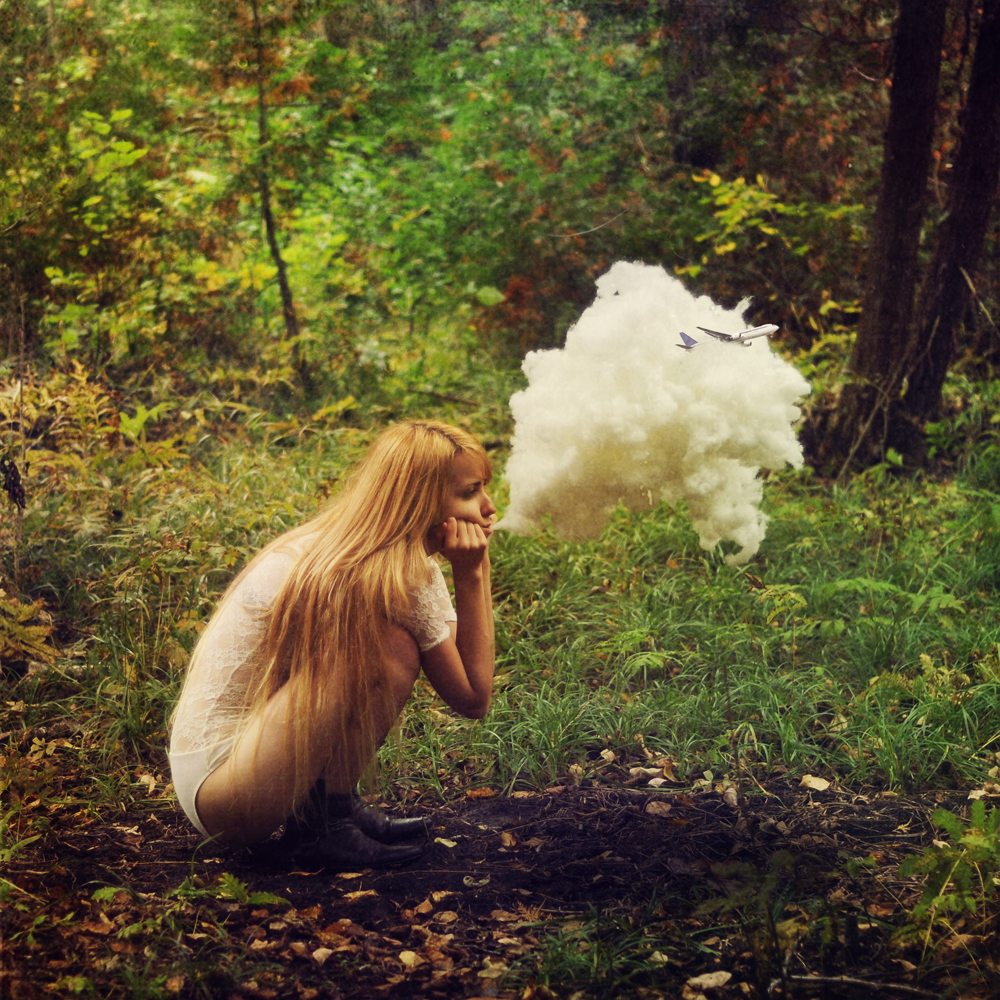
There are plenty of fashion shoots, magazine covers of girls mixed with leaves, water, flowers, trees, whatever you like, to create a dreamy and romantic atmosphere, that sort of photos you'd associate with teenage girly fantasies. And amongst the best of this kind, Lissy Elle, the Canadian photographer, people's Flickr princess has produced some stunning looking work in recent months, following her much praised series of floating bodies in the air called "Get Back In Your Book"


Check out her Facebook page for the latest rejects that didn't make it on Flickr, and her Tumblr for Qs & As
Enhanced by Zemanta
Full post...

Friday, 8 October 2010

Timothy Archbald: Man and Machine

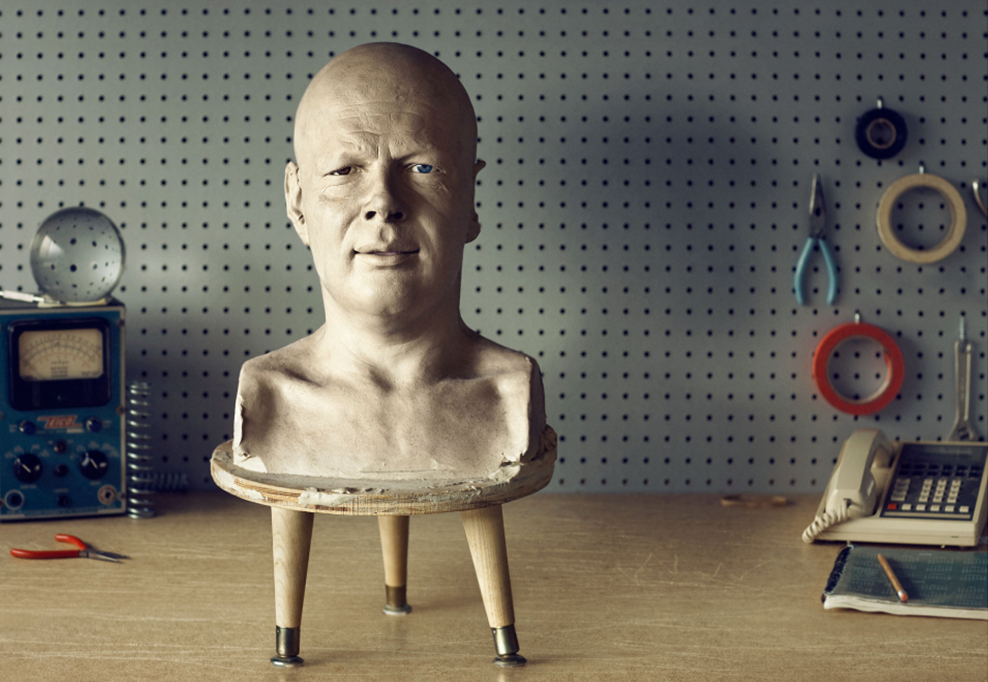
Men have this natural psychological horror when it comes to machines, from Isaac Asimov to the Terminator, we fantasise and terrorise ourselves with robot baddies. This series of photographs by Timothy Archbald seeks to disintegrate the myth around the robotic and showcase the quirky workspace in the home of the founder of Hanson Robotics, Evan Hanson in Richardson, Texas. Enjoy more of Archbald's works here


Full post...

Wednesday, 22 September 2010

24 Xiao: The Chinese Fashion Obsession

Xiao[孝] meaning filial in Chinese might seem completely irrelevant to the series of fashion shots created by the Taiwanese photographer Liang Su and produced by Jeffery Wang from the ad agency BlanQ.


The only connection is that there are 24 pieces in the series and each photo takes one expression in the ancient filial duty bible and applies them to the new found obssession with Western high fashion and luxurious brands. It's completely souless and another attempt to marry up East and West commercial cultures that's visually pleasing. Nevertheless, the images are highly polished, beautifully arranged and fit for the Chinese Vogue and Elle. Spotted brands include Dior and Jean Paul Gaultier.


The agency BlanQ has an extensive portfolio on Behance that's worth checking out.


Full post...

Tuesday, 14 September 2010

Alain Delorme: Super Totems In Shanghai


With her booming economy and authoritative political system, China often finds herself in the spotlight of Western scruntiny and controversy. Recently Morrissey commented that the way Chinese treat animals must make them a "subspecies". Does that make the Germans a subspecies too? Surely they killed more Jews than cats and dogs, and not for food either? Enough said.

Not only do the Chinese make their cultural heritage subject of art works, (Ai Weiwei has certainly paved the way for Western recognition of Chinese contemporary art), many Western artists also find China at the centre of their inspiration, notably British photographer Jasper James, and lately, French photographer Alain Delorme.

During the 2010 World Expo in Shanghai, Delorme wondered around the city away from the modern skyscrapers and the clean streets and deep into the suburbs surrounding the developed central, capturing the daily movements of the "floating population" - the Chinese migrant workers, as they shift cargoes of goods, recycling materials, chairs and bottles in and out of the city to make a living. At first glance these images are half real half surreal, with carefully compositioned and horizontal layers. Delrome cuts out the city in the manner of an archaeologist. Various subjects spread out in a regular way between the ever-changing urban temporalities: the daily newspaper, the ceaseless movement of the passers by, the building sites and the new buildings, which all falls under a slow rhythm. Behind the balance of these compositions, Delorme breaks the rules of the documentary kind, playing with the assembly and the color to present a kind of “hyper reality” which highlights the paradoxes of the most dynamic city of China. 

In these photographs Delorme also captures the individuality of the workers, whereas the common depiction of the Chinese work force has largely been a faceless mass.The author urges us to see the workers as they contribute to the growing consumerism in which they do not benefit from themselves. Alain Delorme reactualizes the documentary proposal here which is based on the contrast between the form and of the representation, with the bright advertising colours, and the subjects of his depiction to underline this variation. These men become the superheroes of the new world whose force seems multiplied by ten. They are believed capable of all the prowesses, maintaining balance of their random and strange burdens with dexterity. Layers upon layers, thousand-year-old China côtoie contemporary industrial power is matched by the ordinary worker's totems. The race is not only among the men in the city, but also that of the city towards its future.


AlainDelorme Totem 2 600x409 Totems by Alain Delorme

Delrome's latest exhibition's in Paris featuring the series of Totems at the Magda Gallery until the 25th of September.
Enhanced by Zemanta
Full post...

Tuesday, 31 August 2010

Dimitri Tsykalov: Flesh and Bones

Russia-born, French trained artist Dimitri Tsykalov's works have been spotted in the English blogosphere widely this month thanks to Booooom, which has drawn attention to some of his latest works: sculptures using fruit and vegetables.

One series Meat exhibited at the Fondation Francès in 2009 particularly stands out as Tsykalov progresses from spatial installations using wood and splinters to construct cars and rooms to photograhpic works featuring models covered in raw meat and bones.

Art is no longer beautiful and innocent in Tsykalov's eyes, it's monstrous, violent and disturbingly sexual.  Behind the bruitality of the subjectst taken up (war, death, terrorim, weapons), the violence of rawness and of its exposition challenges the status quo in our art world. (By the by this would have been the best entry for RAA's summer exhibition this year on the topic of Raw). Art seizes to be pretty little paintings hanged up above the fireplace in some lord's magnificent country house, to be presented and admired. Art in Tsykalov's hands is rustic and bloody, exposing the relations between the murderer and the slaughtered, the shooter and the pray, the weapon and the target.


Meat as a series is beyond pornography. He who runs in the open under a hail of real bullets, he who feels like walking meat, the target for a sniper, is truly exposed. It is this sort of risk that art exposes us to, when it emerges at times, as it does in Tsykalov's case.
Enhanced by Zemanta
Full post...

Thursday, 19 August 2010

Ezequiel Monjo: Captivating Beauty in Buenos Aires

Not much is known of the background of this Argentinine "art lover" who does some amazing photographs that could fit in perfectly with Roberto Bolaño's 2666, with the mysterious and dusty vintage cars, the grey-scale city streets, folks and pets, coffee shops and rusty old buildings.

Have a look on Between Creation for more of his works


Full post...

Sunday, 15 August 2010

Car, crash and art works inspired

Perhaps it's the association between Crash and J G Ballard, works from two artists caught my eyes recently that depict the everyday object beautifully sabotaged.

Danish artist Nicolai Howalt made a series of close-up studies of dented and scratched metal surfaces of wrecked cars, which are often visually disorientating and resemble digitally enhanced abstract paintings. They capture the violent forces and the dark romance of destroyed car bodies in a sobering yet seductive way.

Other works in the series take a step back to examine the larger picture, the smashed windshields and deflated airbags, a strand of bloodied brown hair or a pack of unfinished cigarettes, which are intrinsically Ballardian and voyeuristic.

Howalt’s images were on show in Copenhagen in Feb 2009 at the Martin Asbæk Gallery.


Another artist who had a series of work evolved around the (crashed) car is Li Hui, a multi-media artist based in Beijing whose installations have been widely exhibited and praised in China and Europe.

His latest exhibitions in Germany this year included his extensive sculptures and installations in steel, acrylic, LED  technologies and laser light, which work together to construct enormous and dreamlike scenarios. In particular, Untitled (2007) depicts a crashed car that was demolished in a real accident. The remains are bandaged and fog is rising out of it while they are illuminated by over 13.000 red laser lights mounted to the museum’s ceiling, making the car "breathe and bleed" silmutaneously, like the injured person who was inside quietly waiting in pain after the accident.

Li's obssession with cars started from his graduation project in 2003, which was a converted Jeep with two front drives and no rear end. Since then he has been experimenting with less traditional materials than clay which he was trained to use as a sculptor.


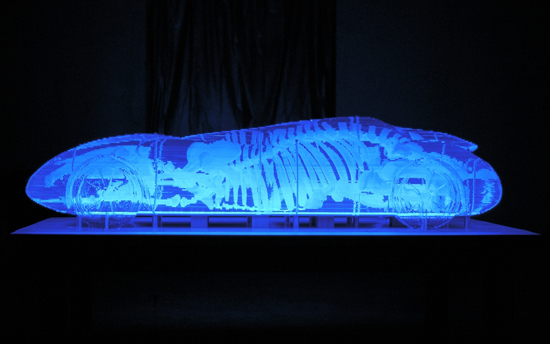
Similar to the UVA, Li's extensive use of laser and lights does not stop at making up lines and squares. Amber (2006) for instance, is a steel car model filled with neon lamp and a dinasaur skeleton on the inside made of neon acrylic. Other works take it one step further from cars and Jeep, including aircraft carrier and rockets. Li likes to challenge the common perception of products associated with the industrial and modern age. Check out his interview with The Creators Project here for the thinking behind his work.
Full post...

Tuesday, 6 July 2010

Inez van Lamsweerde & Vinoodh Matadin at Foam, Amsterdam

The world famous Dutch photographic duo Inez van Lamsweerde and Vinoodh Matadin now have a major exhibition at Foam Stichting Fotografie Museum Amsterdam Pretty Much Everything, featuring their fashion and art works spanning from 1985 to 2010. 

Inez is best known for her photographs of Kate Moss in the early 90s and her controversial series that mix together adolescent female bodies with adult features, as well as skinny men with feminine body parts. The pair has since then moved swiftly in between fashion and art photography (in their eyes there isn't a genre that their work should fall into), photographed celebrities, fashion models and themselves, being commercially successful as well as artistically appreciated.

The exhibition didn't follow any chorological order but focused instead, on how different images and their works lived together in their minds. Pretty Much Everything is open until 15th of Septemeber 2010, new video below from Inez and Vinoodh explaining how this exhibition was put together.


Enhanced by Zemanta
Full post...

Monday, 5 July 2010

Alejandro Guijarro: beyond the photographic boundaries

Guijarro's photographs could possibly be one of the most anti-government images to display in China, with skyscrapers as well as the forbidden city wrapped in thick white fog. If used by environmental activitists, these images could successfully get a few people jailed.

Luckily Guijarro's not in China, nor is he concerned with air pollution but the "spatial relations in photographic representation". What can be seen and what can be understood. He questions the authority of photography and its ability to represent the truth.


Fog or no fog, Guijarro offers a new way of seeing, where boundaries from afar and close by are erased, appearance and disappearance becomes simultaneous. A well deserved finalist of the Man Photography Prize 2009. More work by Guijarro can be found here
Enhanced by Zemanta
Full post...

Thursday, 1 July 2010

Desiree Dolron: Old and New

Thanks to digital cameras and Photoshop, many photographers have enhanced their works in numerous ways with a few mouse clicks. The results are largely disappointingly repetitive and "flat". Dutch artist Desiree Dolron however, has created something far more exciting and exquisite in her previous series exhibited at the Michael Hoppen Gallery. Dolron is largely considered the most successful Dutch photographer on the international stage, with her travel reportage style as well as staged portraits. Her works are collected by the likes of The Guggenheim and V & A and her latest exhibition was in Fototeca de Cuba, Havana in 2010.

Xteriors (2004)


Te dí todos mis sueños(2003)
Full post...

Monday, 28 June 2010

"Street Art" in France

Commissioned by Pronomade(s), French graphic designers Thomas Couderc and Clément Vauchez created these images under the name HELMO using photographer François Serveau's landscape pictures, too bad if they are only used on postcards to promote the Haute-Garonne region!


More works from Helmo found here
Enhanced by Zemanta
Full post...